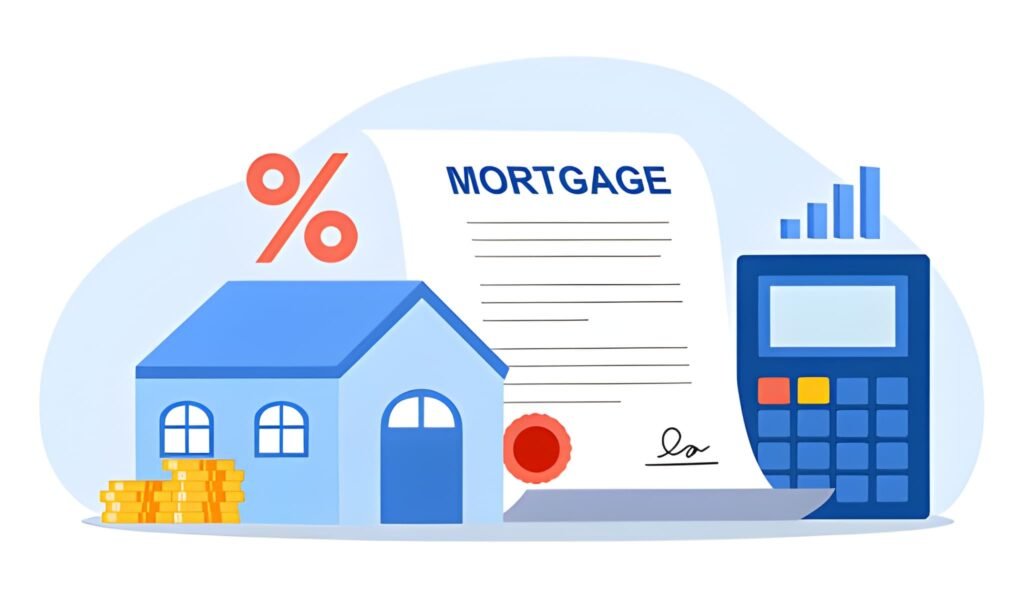
A $400,000 mortgage represents a significant financial commitment that typically finances a primary residence in many markets. At a 6% fixed interest rate over 30 years, this loan offers a stable, predictable payment structure that makes homeownership accessible while still building equity over time. However, the long-term financial implications are substantial, with interest costs representing a significant portion of the total repayment. Understanding the complete monthly payment structure and long-term costs is essential for sound financial planning.
Core Payment: Principal and Interest
The foundation of your mortgage payment is the Principal and Interest (P&I). At 6% interest for 30 years, the monthly P&I payment is fixed at:
$2,398 per month
This payment consists of:
- Month 1: $2,000 interest + $398 principal
- Year 10: Approximately $1,450 interest + $948 principal
- Year 20: Approximately $850 interest + $1,548 principal
This demonstrates the slow build of equity in the early years, with interest comprising the majority of each payment initially.
Complete Monthly Payment: PITI Breakdown
Your actual monthly housing payment will be higher than the $2,398 P&I. Lenders typically require you to pay property taxes and homeowners insurance into an escrow account.
Property Taxes:
- Based on a $500,000 home (20% down payment) at 1.1% effective rate
- Annual tax: ~$5,500
- Monthly cost: $458
Homeowners Insurance:
- For a home in this price range
- Annual premium: ~$2,400
- Monthly cost: $200
Total Monthly PITI: $3,056
This represents your total monthly housing payment, excluding utilities, maintenance, and any HOA fees.
Long-Term Financial Impact
Total Loan Cost Over 30 Years:
- Total payments: $863,280
- Total interest: $463,280
- Interest-to-principal ratio: 116%
This means you’ll pay more in interest than the original loan amount over the life of the loan.
Equity Build Timeline:
- 5 years: ~$45,000 equity (11% of home value)
- 10 years: ~$105,000 equity (26% of home value)
- 15 years: ~$180,000 equity (45% of home value)
Qualification Requirements
Debt-to-Income Ratio (DTI):
To qualify for this $3,056 monthly payment with a maximum 43% DTI:
- Required monthly income: $7,107
- Required annual income: $85,284
This assumes no other significant debt obligations. With car payments, student loans, or credit card debt, the required income would be higher.
Comparative Analysis
Impact of Different Interest Rates:
- 5.5%: $2,271 P&I ($127 less monthly)
- 6.0%: $2,398 P&I (base case)
- 6.5%: $2,528 P&I ($130 more monthly)
The 0.5% rate difference translates to approximately $47,000 in additional interest over the loan term.
Strategic Considerations
Accelerated Payoff Options:
- One extra payment annually: Reduces term to 25 years, saves ~$85,000 in interest
- $100 extra monthly: Reduces term to 26 years, saves ~$75,000 in interest
- Bi-weekly payments: Reduces term to 25.5 years, saves ~$80,000 in interest
Refinancing Considerations:
- Break-even point typically 3-5 years
- Worth considering if rates drop 0.75-1% below current rate
- Closing costs typically 2-5% of loan amount
Risk Management
Interest Rate Environment:
- Current 6% rate is moderate by historical standards
- Protection against future rate increases
- Opportunity to refinance if rates decline
Payment Stability:
- Fixed payment for 30 years
- Protection against inflation eroding payment value
- Predictable housing cost for long-term planning
Conclusion
A $400,000 mortgage at 6% over 30 years results in a total monthly payment of approximately $3,056, including taxes and insurance. While the payment is manageable for households earning $85,000+, the long-term interest cost of $463,000 underscores the importance of considering accelerated payoff strategies. The 6% rate provides a reasonable balance between affordability and cost, offering stability while leaving room for future refinancing opportunities if rates decline. This mortgage represents a substantial but manageable commitment for buyers with stable income and good credit.