The modern smart home has evolved from a novelty of convenience into the most powerful and practical tool for achieving a truly eco-friendly lifestyle. It is no longer just about voice-activated lights; it is about an integrated, adaptive network that optimizes a home’s energy consumption, water use, and resource management with a precision impossible through manual control. A smart home acts as the central nervous system for sustainability, transforming a passive structure into an active, responsive ecosystem that minimizes waste and maximizes efficiency without sacrificing comfort.
The Core Pillars of an Eco-Smart Home
The environmental intelligence of a smart home is built upon three interconnected systems: data collection, automated control, and predictive adaptation.
1. The Energy Brain: Dynamic Load Management and Distribution
This is where the most significant financial and environmental savings are realized. A smart home manages energy not as a constant, but as a dynamic flow to be optimized.
- Smart Thermostats (e.g., Nest, Ecobee): These devices are the cornerstone. They learn schedules, sense occupancy, and use local weather forecasts to pre-heat or pre-cool the home only when necessary. The “Auto-Away” feature alone can reduce HVAC runtime by 10-15%. By coordinating with…
- Smart HVAC Systems (e.g., ductless mini-splits with zoning), they can heat or cool only occupied rooms, avoiding the waste of conditioning an entire house.
- Energy Monitoring and Load Shifting: Smart panels (like Span or Sense) and plugs provide real-time, circuit-by-circuit data on energy use. They identify “phantom loads” from idle electronics and can automatically shift the operation of energy-intensive appliances like dishwashers, dryers, and EV chargers to off-peak hours when grid demand and carbon intensity are lower.
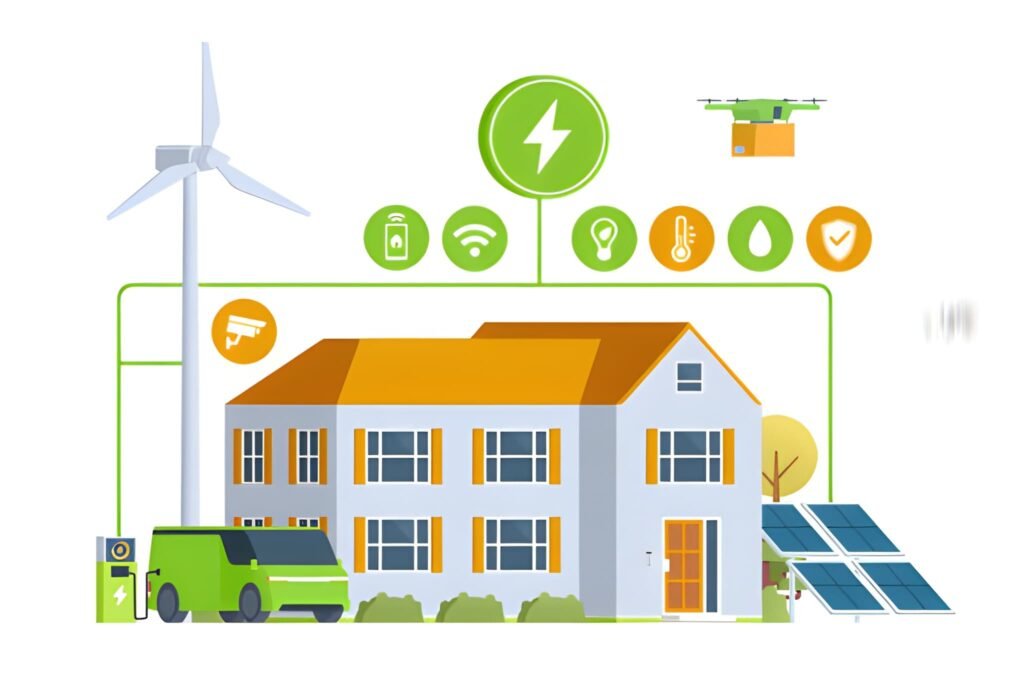
- Renewable Energy Integration: The system intelligently manages on-site solar production. It can decide in real-time whether to send excess power to the grid, to a home battery for later use, or to an electric vehicle, maximizing self-consumption and independence from the fossil-fuel-powered grid.
2. The Water Nervous System: From Detection to Conservation
Water waste is often silent and invisible until it becomes catastrophic. A smart home provides constant vigilance.
- Smart Irrigation Controllers (e.g., Rachio): These systems connect to local weather data to automatically skip watering cycles during rain, adjust schedules based on temperature and evaporation rates, and water different zones with precise amounts needed for specific plant types, reducing outdoor water use by up to 50%.
- Whole-Home Water Monitors (e.g., Flo by Moen): Installed on the main water line, these devices detect tiny, persistent leaks (a running toilet) and major bursts (a broken pipe), automatically shutting off the water supply to prevent thousands of gallons of waste and severe property damage. They provide data on shower and faucet usage, encouraging conservation.
3. The Adaptive Envelope: Responsive Windows, Lighting, and Appliances
The home itself becomes a reactive shell, interacting with the external environment to maintain interior comfort efficiently.
- Smart Lighting with Occupancy and Ambient Light Sensing: Lights automatically turn off in empty rooms and dim or turn off when sufficient natural daylight is present. This eliminates the most common source of pure energy waste.
- Motorized Shades and Blinds: Programmed to lower during the hottest part of the day on sun-facing windows to block solar heat gain, reducing air conditioning load. They can open on winter days to welcome free passive solar heat.
- Smart Appliances: Dishwashers and washing machines can run at the most energy-efficient times and can be set to eco-modes automatically. Smart refrigerators can alert you to an inefficient door seal or adjust cooling cycles during peak energy hours.
The Synergistic Effect: How Systems Work Together
The true power is not in individual devices, but in their integration. A sophisticated smart home system (e.g., controlled by platforms like Control4, Savant, or even advanced Apple HomeKit or Google Home routines) creates powerful, cross-system automations:
- “Goodnight” Routine: This single command can lock doors, arm the security system, turn off all lights, lower the thermostat by two degrees, close all motorized shades to provide insulation, and ensure all non-essential electronics are powered down.
- “Leaving for Work” Routine: Sets the thermostat to an energy-saving “Away” mode, pauses the hot water recirculation pump, and adjusts the smart irrigation schedule if rain is forecasted.
- Storm Alert Response: Upon receiving a severe weather alert, the system can automatically raise motorized shades to protect them from wind damage, ensure sump pumps are operational, and provide a status update on the home’s battery backup power.
The Data-Driven Feedback Loop
Perhaps the most underrated eco-feature of a smart home is its ability to educate. By providing homeowners with clear, accessible data on their energy and water consumption—through simple apps and dashboards—it transforms abstract utility bills into tangible, actionable insights. This feedback loop fosters more conscious behavior, turning conservation from a chore into an engaging challenge.
Smart homes are the indispensable key to modern eco-friendly living because they provide the missing element: consistent, intelligent execution. Human behavior is inconsistent; we forget to turn down the heat, we leave lights on, we water the lawn in the rain. A smart home never forgets. It acts as a diligent, automated steward of resources, ensuring that the sustainable design and efficient systems of a home are utilized to their absolute maximum potential. It is the technological bridge between the intention of living green and the reality of achieving it, making significant carbon reduction and resource conservation an accessible, automated, and effortless part of daily life.