
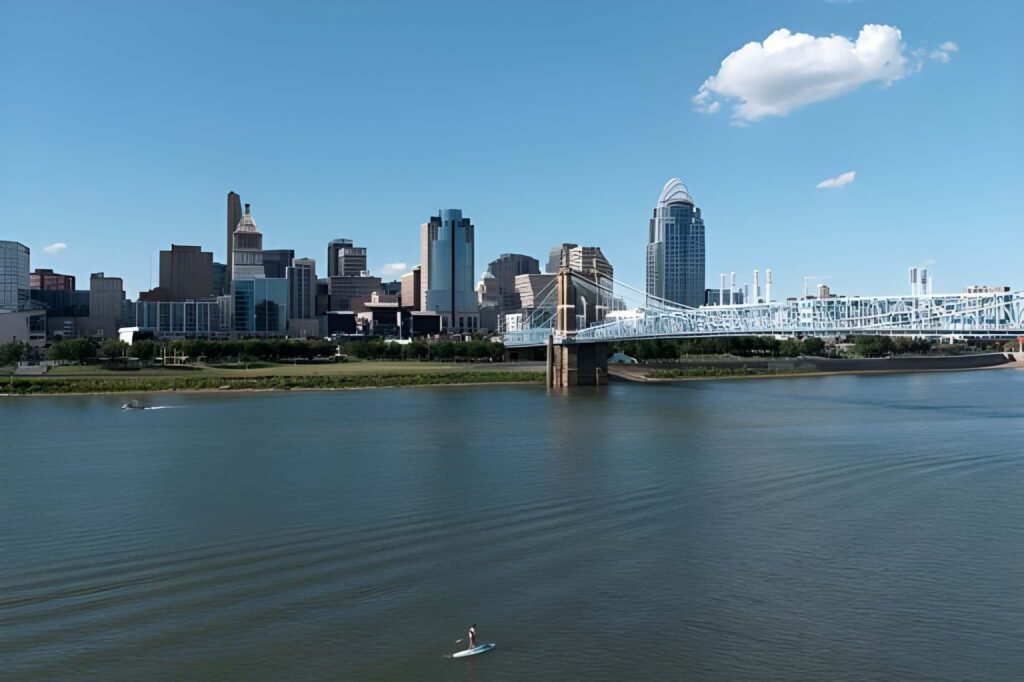
Cincinnati is a city of layered history and resilient charm. Built on seven hills overlooking the Ohio River, it is a place where German heritage, Midwestern pragmatism, and a newfound creative energy converge. Living here means appreciating a city that has gracefully aged, leveraging its stunning 19th-century architecture and industrial bones to forge a modern identity centered on innovation, culture, and an unparalleled sense of community. This guide moves beyond the chili parlors and riverboats to explore the tangible reality of building a life in a city that offers immense historic character and contemporary buzz at a price that feels almost forgotten in modern America.
The River City’s Rebirth: From Porkopolis to a Innovation Hub
Cincinnati’s identity is inextricably linked to its riverfront past as a major pork processing center (“Porkopolis”) and a key stop on the Underground Railroad. After decades of post-industrial decline, the city has engineered a remarkable renaissance. The catalyst was a $2.5 billion public-private investment in overhauling its neglected riverfront, creating The Banks—a vibrant district of apartments, restaurants, and stadiums—and Smale Riverfront Park, now the city’s crown jewel. This investment sparked a renewed confidence, attracting new businesses and young professionals while retaining the deep-rooted families who have defined its character for generations.
The Affordability Kingdom: Cost of Living in the Queen City
Cincinnati’s most powerful asset is its astounding affordability. It consistently ranks as one of the most livable cities in the U.S. due to a low cost of living that pairs beautifully with a high quality of life. Ohio has a progressive income tax, but it is offset by reasonable housing costs and property taxes.
A detailed monthly budget for a professional or young family living in a desirable neighborhood like Oakley or Northside illustrates this value proposition:
- Rent (2-Bed apartment): $1,200 – $1,500
- Utilities (Gas/Electricity): $150 – $250 (seasonal)
- Internet: $70
- Groceries: $400
- Gasoline & Car Maintenance: $250 (a car is useful, but some areas are walkable)
- Dining & Entertainment: $450 (the brewery and food scene is a major draw)
This puts a baseline monthly expenditure between $2,520 and $2,920, not including savings or healthcare. This financial breathing room is Cincinnati’s primary magnet, allowing residents to enjoy life without being house-poor.
A Diversified and Stable Economy: Job Market and Career Opportunities
Cincinnati boasts a Fortune 500 density that rivals cities twice its size, providing a stable, diverse economic base that is resistant to boom-and-bust cycles.
- Consumer Goods & Manufacturing: The city is a global hub for this sector. Headquarters for The Procter & Gamble Company, The Kroger Co., and Macy’s anchor the economy, providing tens of thousands of jobs in marketing, supply chain, finance, and corporate management. This is the bedrock of the city’s white-collar workforce.
- Healthcare & Bio-Science: The University of Cincinnati Medical Center and Cincinnati Children’s Hospital Medical Center (consistently ranked among the top pediatric hospitals in the nation) form a massive academic medical and research corridor. This sector is a relentless growth engine, attracting top medical talent from around the world.
- Finance & Insurance: Fifth Third Bank and Western & Southern Financial Group are major headquartered financial institutions, providing a stable source of high-paying jobs.
- Aviation: GE Aerospace (formerly GE Aviation) is a cornerstone employer in the region, engineering and manufacturing jet engines and employing a vast number of engineers.
This corporate diversity creates a robust job market with opportunities for everyone from factory floor technicians to PhD researchers and MBAs.
A City of Distinct, Hillside Neighborhoods: Finding Your Home
Cincinnati is a city of 52 distinct neighborhoods, each nestled into its own hill or valley, creating fiercely independent communities with unique identities.
- Over-the-Rhine (OTR): The epicenter of Cincinnati’s rebirth. This 19th-century German immigrant neighborhood, once one of the most dangerous in the country, is now a national model for historic preservation and urban revitalization. Its blocks of stunning Italianate architecture house some of the city’s best restaurants, bars, coffee shops, and breweries. It is walkable, energetic, and culturally vibrant.
- Oakley/Hyde Park: Affluent, family-friendly neighborhoods known for their bustling town squares (Oakley Square, Hyde Park Square), excellent schools, and beautiful parks. They offer a mix of historic homes and newer constructions, attracting professionals and families seeking a vibrant but settled lifestyle.
- Northside: The city’s quirky, progressive, and artistic enclave. It has a proud LGBTQ+ history, a fiercely independent spirit, and a main drag filled with vintage stores, dive bars, and eclectic eateries. It’s more affordable and less polished than OTR.
- Mount Adams: A picturesque, historic neighborhood perched on a hill overlooking downtown and the river. Its narrow, winding streets are lined with charming homes, offering some of the best views in the city. It feels like a secluded urban village.
- Clifton/CUF (Clifton Heights/University Heights/Fairview): The academic core, home to the University of Cincinnati and Xavier University. The area is a mix of students, professors, and long-time residents, with a bohemian vibe and beautiful, historic architecture.
- The Suburbs (Mason, West Chester, Fort Mitchell): The greater Cincinnati area includes Northern Kentucky and suburbs across the state line. Areas like Mason are major employment hubs (home to GE Aerospace and Kings Island amusement park), while others offer top-rated school districts and more suburban lifestyles.
The Queen City Calculation: Renting vs. Buying
The healthy balance between renting and buying is a key feature of the Cincinnati market, making both options highly viable and accessible.
The Case for Renting: Renting offers flexibility to explore the city’s diverse neighborhoods, from the historic energy of OTR to the suburban calm of the outer neighborhoods. It’s a perfect option for newcomers or those not ready to commit to maintaining a historic home.
The Case for Buying: For those committed to staying 3-5+ years, buying is an exceptionally achievable path to building equity. The low barrier to entry—with median home prices around $250,000—makes homeownership a reality for many.
A Simplified Financial Comparison:
Consider a $275,000 single-family home in a neighborhood like Northside.
- Renting: Monthly rent for a similar property: ~$1,400. This is a pure expense.
- Buying:
- Down Payment (10%): $27,500
- Mortgage Principal & Interest (30-year fixed at 7%): ~$1,650/month
- Property Taxes (Hamilton County, effective rate ~1.5%): \frac{1.5}{100} \times 275,000 = \$4,125 per year, or ~$344/month
- Homeowners Insurance: ~$100/month
- Total Monthly Cost (P&I + Taxes + Insurance): ~$2,094
This calculation shows a moderate premium for buying, but the principal portion of the mortgage payment builds equity. The break-even point is relatively short, making buying a powerful wealth-building tool.
The Housing Market: Historic Gems and Modest Ranches
Cincinnati’s housing stock is a treasure trove of 19th and early 20th-century architecture, from Italianate and Victorian to Arts & Crafts.
Average Home Prices: The median home price in the Cincinnati metro is remarkably affordable, typically hovering between $250,000 and $275,000.
Most Affordable Areas to Buy a Home: The most affordable options are typically found in Westwood, Price Hill, and Avondale. These areas offer significant potential for appreciation but require due diligence and community engagement.
Luxury Real Estate Hotspots: The luxury market is concentrated in:
- Indian Hill: An incorporated village and the epitome of old-money Cincinnati wealth, with multi-acre estates and extreme exclusivity.
- Hyde Park & Mount Lookout: Prestigious neighborhoods with multi-million dollar homes on tree-lined streets.
- Mainstrasse Village (Covington, KY): A historic district on the Kentucky side known for its beautifully restored homes and walkable, vibrant atmosphere.
Rental Market: The market is balanced. Expect to pay:
- 1-Bed Apartment: $900 – $1,200
- 2-Bed Apartment: $1,100 – $1,600
- 3-Bed Single-Family Home: $1,400 – $2,000
Investing in the Renaissance: Real Estate Investment and Growth
Cincinnati’s ongoing renaissance and stable economy make it a strong market for long-term investment.
- Best Places to Invest: Neighborhoods adjacent to the ongoing wave of revitalization are prime targets. Walnut Hills and Pendleton are already seeing significant investment following OTR’s success. The West End, near the new FC Cincinnati stadium, is also poised for change.
- Future Growth Neighborhoods: The continued development of the Cincinnati Bell Connector streetcar route will likely spur further investment in the corridor connecting downtown, OTR, and the University of Cincinnati.
The Commute: Hills, Highways, and a Streetcar
Cincinnati’s topography creates unique commuting challenges and views.
- The Car: This is the primary mode of transport for most. The highway system (I-71, I-75, I-275 beltway) can be congested during rush hour, especially at the river crossings between Ohio and Kentucky.
- Public Transit: Metro bus service provides coverage but is often slow. The Cincinnati Bell Connector streetcar is a useful and free mode of transport for navigating the dense urban core between The Banks and Findlay Market.
- Biking/Walking: The hilly terrain makes biking challenging, but neighborhoods like OTR, Downtown, and Northside are very walkable for daily errands. The Ohio River Trail is a growing asset for recreation and commuting.
Life in the Queen City: Chili, Culture, and Community
Cincinnati’s culture is unique, rooted in its history and fueled by a renewed sense of civic pride.
- The Food Scene: Far more than just its unique, cinnamon-spiced Cincinnati Chili (served over spaghetti or on hot dogs). The city has a thriving culinary scene, from upscale New American restaurants to incredible Findlay Market, Ohio’s oldest continuously operated public market. The brewery scene (Rhinegeist, MadTree) is also top-tier.
- The Arts: The Cincinnati Art Museum and the Contemporary Arts Center are world-class institutions. The Cincinnati Symphony Orchestra and Cincinnati Opera are among the oldest and most respected in the nation.
- Parks & Outdoors: The Cincinnati Parks system is nationally acclaimed, with gems like Eden Park and Ault Park offering stunning views and green space. The riverfront is now a major destination for recreation.
- Sports: A passionate sports city home to the Cincinnati Reds (MLB), Cincinnati Bengals (NFL), and the new FC Cincinnati (MLS), whose dedicated soccer stadium has become a new landmark.
The Family Equation: Schools, Safety, and Suburbs
The question of schools is a primary driver for family movement within the metro.
- Best Schools & Universities: Cincinnati Public Schools (CPS) is highly variable but includes excellent magnet schools like Walnut Hills High School, a top-ranked public school in the nation. The highest-rated public school districts are in the suburbs: Indian Hill Exempted Village, Sycamore, and Mason. For higher education, the University of Cincinnati is a top-tier public research university, and Xavier University is a respected private Jesuit school.
- Best Suburbs: Indian Hill, Hyde Park, Mason, and Fort Mitchell on the Kentucky side are top choices for families seeking top-rated schools and safety.
- Raising a Family & Safety: Crime is a concern in parts of the urban core, but neighborhoods like Hyde Park, Oakley, and the suburbs consistently report very low crime rates.
The Practicalities: Seasons, Healthcare, and Relocation
- Weather and Climate: Cincinnati has a humid subtropical climate with four distinct seasons. Summers are hot and humid, winters are cold and snowy, and spring is beautiful but prone to thunderstorms and a risk of tornadoes.
- Healthcare: The city is a major healthcare hub. Cincinnati Children’s Hospital is a world leader in pediatrics. Christ Hospital and UC Health operate extensive, high-quality networks for adults.
- Relocation Checklist:
- Learn to Navigate the Hills: The topography can be confusing; spend time learning the layout.
- Try the Chili (With an Open Mind): It’s a local institution, but it’s an acquired taste.
- Explore the Neighborhoods: Don’t judge the city by its downtown alone; the neighborhoods are its heart.
- Get a Car: While the core is walkable, a car is necessary for full mobility.
- Embrace the Seasons: Have a wardrobe for humid summers, snowy winters, and everything in between.
Cincinnati is a city for those who appreciate authenticity, history, and value. It doesn’t dazzle with flash; it impresses with its substance—its stunning architecture, its world-class arts institutions, its stable corporate citizens, and its incredibly strong sense of community. It is a city that has thoughtfully curated its past to build a dynamic and affordable future. Living in Cincinnati is a choice for a rich, full life where your money goes far and your community feels close. It is the undisputed Queen City of the West, and it reigns supreme in the category of livability.