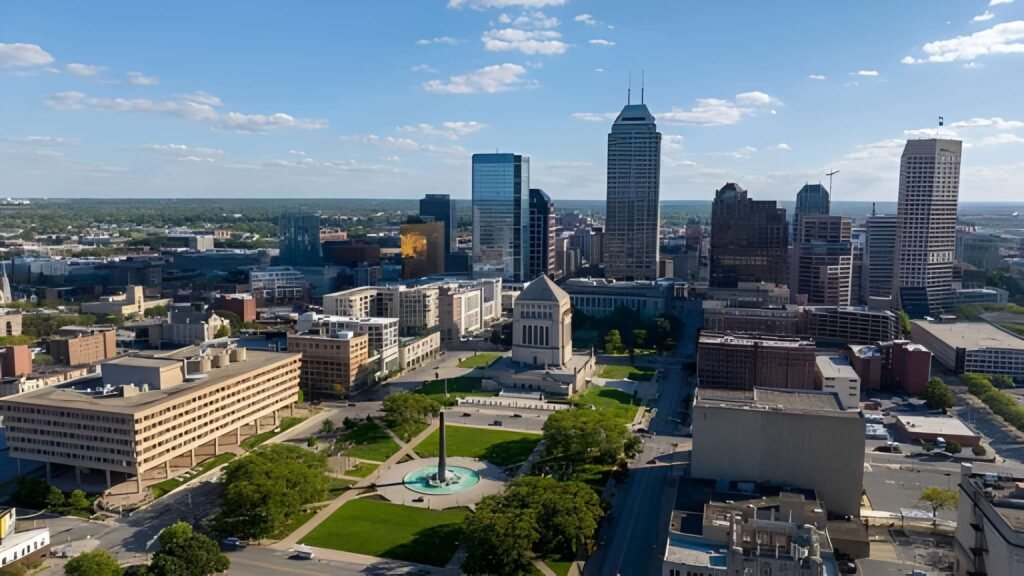
Indianapolis is a city that confidently defies flyover country stereotypes. It is the undisputed economic and cultural capital of Indiana, a sprawling, pragmatic metropolis built on a legacy of manufacturing, logistics, and sports. Living here means embracing a city of understated strengths: a low cost of living, a central location that puts much of the Midwest within a day’s drive, and a community-oriented culture that prizes authenticity over pretense. This guide moves beyond the racetrack and the football stadium to explore the tangible reality of building a life in the Circle City, a place where ambition is accessible and the quality of life is high, even if the skyline is modest.
The Crossroads of America: Location as a Strategic Asset
Indianapolis’s identity and economy are fundamentally shaped by its geography. Nicknamed “The Crossroads of America,” it sits at the junction of four major interstate highways (I-65, I-69, I-70, I-74). This isn’t just a slogan; it’s the city’s economic engine. This centrality has made it a national logistics and distribution powerhouse and a convenient meeting point, fueling a robust convention industry. For residents, it means unparalleled access to other major cities—Chicago, Cincinnati, Louisville, and Nashville are all within a three to four-hour drive.
The Affordability Advantage: Cost of Living in the Circle City
Indianapolis’s greatest selling point is its high quality of life relative to its cost. It is one of the most affordable major cities in the United States. Indiana has a flat state income tax of 3.15%, and property taxes are reasonable. This combination allows residents to achieve a comfortable, middle-class lifestyle that is increasingly out of reach in coastal metros.
A detailed monthly budget for a professional or young family living in a two-bedroom apartment in a desirable neighborhood like Broad Ripple or Irvington illustrates this value:
- Rent: $1,200 – $1,500
- Utilities (Gas/Electricity): $150 – $250 (seasonal)
- Internet: $70
- Groceries: $400
- Gasoline & Car Maintenance: $250 (a car is essential)
- Dining & Entertainment: $450
This puts a baseline monthly expenditure between $2,520 and $2,920, not including savings or healthcare. This affordability provides significant disposable income for savings, travel, and enjoying the city’s amenities.
A Diversified Midwest Engine: Job Market and Career Opportunities
Indianapolis has successfully transitioned from a Rust Belt manufacturing base to a diverse, modern economy with several strong pillars.
- Logistics & Advanced Manufacturing: The city’s crossroads location makes it a national hub for warehousing and distribution, with massive facilities for companies like Amazon, FedEx, and Allison Transmission. Advanced manufacturing remains strong, particularly in automotive and pharmaceutical sectors.
- Life Sciences: Indianapolis is a global leader in the life sciences industry. Eli Lilly and Company, a Fortune 500 pharmaceutical giant, is headquartered here and is a massive employer. Other key players include Roche Diagnostics and Cook Medical, creating a high concentration of jobs for scientists, researchers, and engineers.
- Healthcare: With over a dozen hospital systems, healthcare is a top employer. Indiana University Health, Eskenazi Health, and Community Health Network operate vast networks of hospitals and clinics.
- Technology & Software: A growing tech scene has emerged, often focused on sales and marketing tech (“MarTech”) due to the presence of Salesforce (which acquired local hero ExactTarget) and Angi (formerly Angie’s List). This provides a pathway for tech careers outside of traditional coastal hubs.
- Sports & Events: The sports industry is a genuine economic driver, centered around the NCAA headquarters, the Indianapolis Colts (NFL), the Indiana Pacers (NBA), and the famed Indianapolis Motor Speedway.
This economic diversity provides stability and opportunity across a wide range of skill sets and education levels.
A City of Neighborhoods: Finding Your Community
Unlike many Midwestern cities, Indianapolis annexed its surrounding suburbs decades ago, creating a vast city limits filled with distinct, often historic, neighborhoods.
- Downtown/Wholesale District: The urban core is clean, walkable, and anchored by Circle Centre Mall, numerous sports venues, and a growing number of residential conversions. The Canal Walk is a beautiful recreational asset.
- Broad Ripple: The epicenter of nightlife and young professional life. Located along the Central Canal, its main drag is packed with bars, restaurants, music venues, and boutiques. It has a vibrant, energetic, and sometimes rowdy vibe.
- Irvington: A historic, charming neighborhood on the east side known for its beautiful Victorian and Arts & Crafts homes, tree-lined streets, and strong community association. It has a slightly bohemian, family-friendly feel.
- Fountain Square: Located just southeast of downtown, this has been the city’s trendiest neighborhood for over a decade. It’s a hub for artists, musicians, and creatives, with indie boutiques, vintage stores, duckpin bowling, and some of the city’s best restaurants.
- Carmel & Fishers: While technically separate cities to the north, they are integral to the Indy metro experience. These are affluent, master-planned suburbs consistently ranked among the best places to live in the U.S. They offer top-rated schools, extensive trail systems, and a more polished, corporate feel.
- Mass Ave: A cultural district northeast of downtown known for its theaters, art galleries, public art installations, and a sophisticated dining and cocktail scene. It feels urban and cultured.
- SoBro (South Broad Ripple): A more residential, slightly quieter extension of Broad Ripple, popular with young families and graduate students who want proximity to the action without being in the middle of it.
The Hoosier Calculation: Renting vs. Buying
The healthy balance between renting and buying is a key feature of the Indianapolis market, making both options highly viable and accessible.
The Case for Renting: Renting offers flexibility to explore different neighborhoods, from the historic charm of Irvington to the modern apartments in Fishers. It’s an excellent option for newcomers or those not ready to commit to homeownership.
The Case for Buying: For those committed to staying 3-5+ years, buying is an exceptionally achievable way to build equity. The low barrier to entry—with median home prices around $250,000—makes homeownership a reality for many young people and families.
A Simplified Financial Comparison:
Consider a $250,000 home in a neighborhood like Irvington.
- Renting: Monthly rent for a similar property: ~$1,400. This is a pure expense.
- Buying:
- Down Payment (10%): $25,000
- Mortgage Principal & Interest (30-year fixed at 7%): ~$1,500/month
- Property Taxes (Marion County, effective rate ~1.0%): \frac{1.0}{100} \times 250,000 = \$2,500 per year, or ~$208/month
- Homeowners Insurance: ~$80/month
- Total Monthly Cost (P&I + Taxes + Insurance): ~$1,788
This calculation shows a moderate premium for buying, but the principal portion of the mortgage payment (~$290 in the first month) builds equity. The break-even point is relatively short, making buying a powerful wealth-building tool.
The Housing Market: Bungalows, Tudors, and New Construction
Indianapolis boasts a wealth of attractive, early 20th-century housing stock, particularly Craftsman bungalows and American Foursquares.
Average Home Prices: The median home price in the Indianapolis metro is remarkably affordable, typically hovering between $240,000 and $260,000.
Most Affordable Areas to Buy a Home: The most affordable options are typically found on the near east side, near west side, and in Beech Grove (an enclosed city within Indy). These areas offer significant potential for appreciation but require due diligence.
Luxury Real Estate Hotspots: The luxury market is concentrated in:
- Meridian-Kessler: An affluent, historic neighborhood north of downtown known for its stunning Tudors, Colonials, and tree-canopied streets.
- Williams Creek: A small, exclusive enclave with multi-acre estates.
- Carmel & Fishers: The suburbs offer luxury new construction and large, custom homes on golf courses and in gated communities.
Rental Market: The market is balanced. Expect to pay:
- 1-Bed Apartment: $900 – $1,200
- 2-Bed Apartment: $1,100 – $1,500
- 3-Bed Single-Family Home: $1,400 – $1,900
Investing in the Crossroads: Real Estate Investment and Growth
Indianapolis’s stable economy, population growth, and affordability make it a consistently strong market for long-term investment, particularly in rental properties.
- Best Places to Invest: Neighborhoods adjacent to already-hot areas offer great potential. The Near-Eastside (following the success of Irvington and Fountain Square) and areas along the Monon Trail corridor are prime targets for appreciation.
- Future Growth Neighborhoods: The 16 Tech innovation district, a massive redevelopment area just north of downtown, is poised to be a major new hub for tech and life sciences companies, driving demand in surrounding neighborhoods.
The Commute: The Spoke-and-Hub Highway System
Indianapolis is a car city, but its traffic is mild compared to most major metros.
- The Car: This is the primary mode of transport. The highway system is a simple spoke-and-hub model with I-465 as the outer beltway and interstates 65, 69, 70, and 74 converging downtown. Rush hour exists but is typically manageable.
- Public Transit: IndyGo bus system provides coverage, but it is limited. The new Purple Line and Blue Line BRT (Bus Rapid Transit) lines are significant upgrades aimed at improving north-south and east-west connectivity.
- Biking: The Cultural Trail and the Monon Trail are exceptional paved trails that serve as legitimate commuter corridors and recreational assets, connecting downtown to Broad Ripple and beyond.
Life in the Circle City: Sports, Culture, and Community
Indianapolis culture is welcoming, community-oriented, and proudly centered around sports.
- The Sports Culture: This is the city’s heartbeat. From the Indianapolis 500 (the largest single-day sporting event in the world) to Colts and Pacers games, sports are a unifying civic religion. The city is also a premier host for NCAA championship events.
- The Arts & Culture: Far more robust than often assumed. The Indianapolis Museum of Art at Newfields is a world-class institution with a sprawling campus. The Indianapolis Symphony Orchestra and numerous live theaters provide high-quality performances.
- The Food Scene: A meat-and-potatoes town at heart that has evolved dramatically. It’s known for its classic steakhouse tradition but now boasts a thriving scene of chef-driven restaurants, craft breweries (Sun King, Taxman), and international cuisine, particularly in ethnic enclaves.
- Festivals: The city embraces festivals, from the massive Indy 500 Snake Pit to the Indiana State Fair and cultural festivals like Italian Street Festival and Greekfest.
The Family Equation: Schools, Safety, and Suburbs
The question of schools is the primary driver for family movement within the metro, often to the northern suburbs.
- Best Schools & Universities: Indianapolis Public Schools (IPS) faces challenges, but it includes prestigious magnet schools like Butler University Laboratory School and Crispus Attucks High School. The highest-rated public school districts are in the suburbs: Carmel-Clay, Hamilton Southeastern (Fishers), and Zionsville. For higher education, Indiana University-Purdue University Indianapolis (IUPUI) is a major urban research university, and Butler University is a respected private school.
- Best Suburbs: Carmel, Fishers, Zionsville, and Greenwood (to the south) are the top choices for families seeking top-rated schools, safety, and community amenities.
- Raising a Family & Safety: Crime is a concern in parts of the urban core, particularly on the east and near west sides. The downtown core is generally safe, and the northern suburbs consistently report very low crime rates.
The Practicalities: Seasons, Healthcare, and Relocation
- Weather and Climate: Indianapolis has a classic four-season humid continental climate. Summers are hot and humid, winters are cold and snowy with occasional sub-zero temperatures, and spring and fall are pleasant but can be unpredictable with a risk of tornadoes.
- Healthcare: The city is a major healthcare hub for the region. Indiana University Health is a top-ranked academic medical system. Eskenazi Health and Ascension St. Vincent also operate extensive, high-quality networks.
- Relocation Checklist:
- Invest in a Four-Season Wardrobe: You will need everything from shorts and sunscreen to a heavy winter coat and boots.
- Secure Housing: The market moves quickly due to affordability; be prepared to act.
- Get a Car: Reliable personal transportation is non-negotiable.
- Embrace the Sports Culture: Even if you’re not a fan, understanding its importance is key to understanding the city.
- Explore the Trails: The Monon and Cultural Trails are the city’s best amenities for recreation and commuting.
Indianapolis is a city for pragmatists and optimists. It doesn’t offer ocean views or mountain vistas, but it provides something increasingly rare: an affordable, stable, and welcoming environment where a high quality of life is attainable for a broad swath of people. It is a city that is comfortable in its own skin, proud of its roots, and confidently building its future. Living in Indianapolis is a choice for community, convenience, and comfort—a testament to the enduring appeal of the solid, well-run American heartland city.