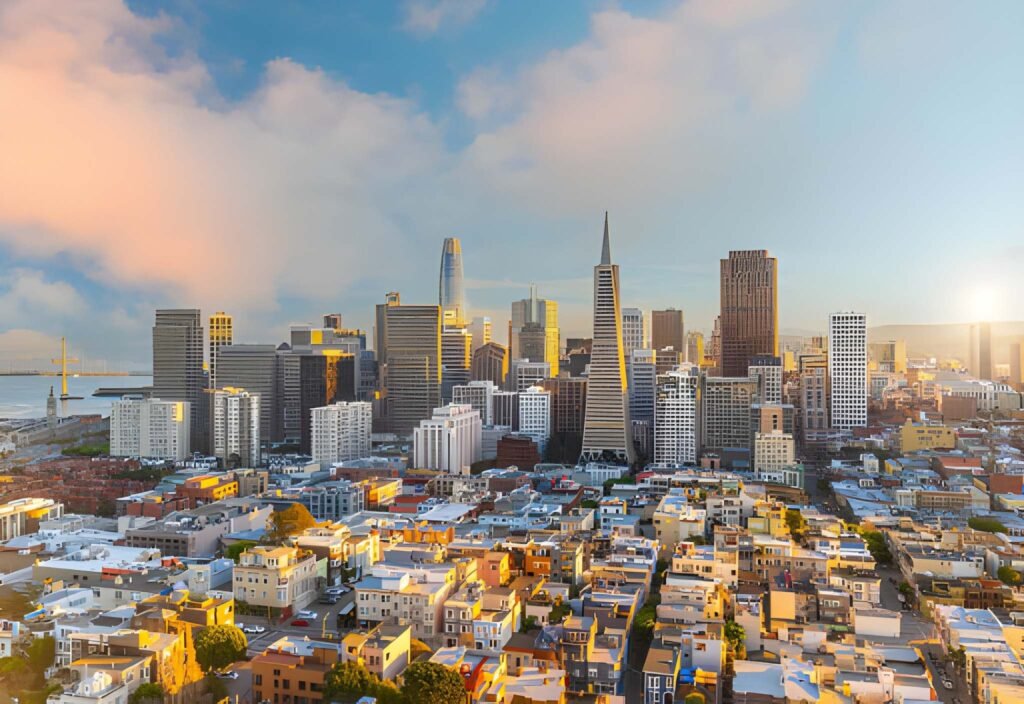
San Francisco exists as an idea as much as a city—a symbol of counterculture, technological revolution, and breathtaking beauty perched on a peninsula. Living in San Francisco means navigating the most extreme contrasts of modern American urbanism: unparalleled natural scenery and staggering human density, obscene wealth and pervasive street poverty, world-changing innovation and deeply entrenched tradition. It is a city that demands a high price for its privileges, both financial and emotional. This guide moves beyond the postcard imagery to examine the intricate realities of life in the City by the Bay, from its stratospheric cost of living to its resilient neighborhood character, providing a clear-eyed view of what it truly means to build a life on this coveted, fault-ridden edge of the continent.
The San Francisco State of Mind: Life in 49 Square Miles
Life in San Francisco is defined by its density and its topography. The city is a mere 7×7 miles, a geographic constraint that creates an intense, village-like feeling within each of its distinct neighborhoods. The hills and microclimates are not just features; they are active characters in daily life, dictating your route, your wardrobe, and your social plans (a sunny afternoon in the Mission can be a foggy, cold evening in the Outer Sunset). The energy is a frenetic blend of ambition and escapism. It is a city of high achievers—tech titans, scientists, artists—all drawn to the creative potential that buzzes in the air. Yet, a lingering bohemian spirit persists in the city’s dive bars, activist circles, and vast parklands. The pace is fast, the conversations are heady, and the cost of existing is a constant, low-grade hum of anxiety for all but the most fortunate. It is a place of immense beauty and profound challenge, often on the same block.
The Peak Price: Cost of Living
San Francisco consistently vies with New York City for the highest cost of living in the United States. This is not a minor differentiator; it is the central, overwhelming reality that shapes every decision.
A detailed budget for a single professional living in a one-bedroom apartment in a moderately central neighborhood like Noe Valley or the Castro might look like this:
- Rent: $3,400 (for a 600-700 sq ft apartment)
- Utilities (Electricity, Gas, Internet): $200
- Groceries: $500 (high due to city-specific costs)
- Dining & Entertainment: $700 (dining out is a primary social activity)
- Transportation (Muni Pass, occasional rideshare): $150
- Miscellaneous: $400
This creates a baseline monthly expenditure of approximately $5,350. To afford this comfortably (using the standard guideline that rent should not exceed 30% of gross income), your pre-tax annual income would need to be at least $136,000.
This calculation is shown as:
\text{Required Annual Income} = \frac{\$3,400 \times 12}{0.3} = \$136,000This figure is a baseline for a modest, single lifestyle. For a family, the required income multiplies exponentially, especially when factoring in childcare, which can exceed $3,000 per month per child.
A City of Villages: Best Neighborhoods
Your choice of neighborhood in San Francisco is a declaration of values and lifestyle. The divide between the “east side” (sunnier, denser, more expensive) and the “west side” (foggier, more residential, more family-oriented) is a fundamental cultural split.
- The Core/Downtown:
- SoMa (South of Market): The epicenter of the tech boom, dotted with condo high-rises, tech headquarters, and museums. More corporate and less residential, though that is changing.
- Mission District: The historic heart of Latino culture, now ground zero for gentrification. A vibrant mix of legendary taquerias, hipster boutiques, and some of the city’s best nightlife. Energetic and often chaotic.
- The Castro: The iconic LGBTQ+ neighborhood, with a powerful sense of history and community. Vibrant, welcoming, and centrally located.
- The North/East:
- Marina/Cow Hollow: Affluent, preppy, and bustling with fitness-oriented young professionals. Offers stunning views of the Golden Gate Bridge and access to the Marina Green.
- Pacific Heights: The epitome of old money and grandeur, with breathtaking mansions and views. Quiet, clean, and profoundly expensive.
- The Center:
- Hayes Valley: A chic, design-forward neighborhood built along a former freeway off-ramp. Known for its boutique shopping, trendy restaurants, and central location.
- Noe Valley: A sunny, family-friendly “stroller valley” with a charming main street, top-rated schools, and a high concentration of dual-income tech families.
- The West:
- Richmond & Sunset Districts: The city’s “suburbs.” Foggy, laid-back, and primarily residential. Home to incredible Asian restaurants, access to Golden Gate Park, and more affordable (by SF standards) housing options, often single-family homes.
The Ultimate Trade-Off: Renting vs. Buying
The decision to rent or buy in San Francisco is a monumental financial calculation, accessible only to a small fraction of the population.
Renting is the only viable option for the majority. It offers flexibility in a transient city where job changes are frequent. The rental market is fiercely competitive, with rent-controlled apartments being a coveted, life-changing asset.
Buying is a stratospheric financial commitment. The median home price consistently exceeds $1.4 million. A 20% down payment alone is $280,000—a sum that represents a lifetime of savings for most. Those who can buy are often leveraging stock options from tech IPOs or generational wealth.
The financial break-even point is extremely long due to the massive upfront cost. A simplified formula illustrates the daunting math:
\text{Break-Even Point (years)} = \frac{\text{Total Upfront Costs}}{\text{Annual Rent} - (\text{Annual Mortgage Interest} + \text{Annual Property Taxes} + \text{Annual Maintenance})}Upfront costs include the colossal down payment and closing costs. This equation often pushes the break-even point beyond 10 years, making buying a long-term lifestyle choice rather than a pure financial investment for many.
The Engine of the New Economy: Job Market and Career Opportunities
San Francisco’s economy is dominated by the technology sector, but it is more nuanced than that.
- Technology: The undisputed core. The city proper and the surrounding Bay Area are home to thousands of tech companies, from titans like Salesforce, Uber, and Airbnb to countless startups and venture capital firms. Jobs span engineering, product management, design, marketing, and sales.
- Finance & Professional Services: A major hub for venture capital, private equity, and fintech. Traditional finance, law, and consulting firms have significant offices to serve the tech industry.
- Tourism & Hospitality: A perennial industry driven by the city’s global appeal. Employment in hotels, restaurants, and tours is significant but often pays far less than the tech sector, creating a stark income divide.
- Healthcare & BioSciences: While stronger in South San Francisco and the Peninsula, UCSF is a world-renowned medical center and a major employer.
- Non-Profit & Arts: A robust sector of advocacy, environmental, and arts organizations is drawn to the city’s progressive values, though they struggle with the high costs.
Educational Landscape: Best Schools and Universities
San Francisco Unified School District (SFUSD) is a source of great anxiety for families. The school assignment system is a complex, lottery-based process that does not guarantee attendance at a neighborhood school, leading to uncertainty and stress. This has created a robust market for private schools, which can cost $40,000 – $50,000+ per year per child.
For higher education, the Bay Area is an elite global hub:
- University of California, San Francisco (UCSF): A world-leading health sciences university and medical center.
- San Francisco State University (SFSU): A large public university known for its diverse student body and liberal arts programs.
- University of San Francisco (USF): A private Jesuit university with a beautiful campus and strong graduate programs.
- Nearby: Stanford University and UC Berkeley are a short drive away and are integral to the region’s talent pipeline.
Getting Around: Public Transportation and Commuting
San Francisco is a dense, walkable city where many residents live without a car. The Muni system operates buses, light rail, and the iconic cable cars. BART (Bay Area Rapid Transit) connects SF to the East Bay and the airport. While far from perfect (delays are common), it is a functional system for many daily needs. For trips across the bay or to the Peninsula, a car becomes more necessary, but traffic on the 101 and I-280 can be severe. Cycling is popular but can be perilous due to the hills and traffic.
The Housing Market: A Tactical Overview
The San Francisco housing market is an extreme sport, characterized by low inventory, intense competition, and prices that defy national norms.
- Average Home Prices: As of late 2023, the median sale price for a home in San Francisco is approximately $1,400,000. This typically buys a condo or a small single-family home needing updates.
- Most Affordable Areas to Buy a Home: Look to the city’s edges: the Outer Sunset, Outer Richmond, Bayview, and Visitacion Valley. These areas offer relative value (though still expensive) but often come with longer commutes and foggy weather.
- Luxury Real Estate Hotspots: Pacific Heights, Presidio Heights, Russian Hill, and Sea Cliff are the historic epicenters of luxury, with commanding views and grand estates. New construction condos in SoMa and Mission Bay also command premium prices.
- Rental Market: Extremely competitive. Vacancy rates are low. Rent-controlled buildings are the holy grail. Landlords are meticulous, often requiring proof of income at 3x the monthly rent, excellent credit, and references.
- Best Places to Invest & Future Growth Neighborhoods: Investment looks toward areas with major development projects. Mission Bay (now nearly built out), Dogpatch, and the Central Waterfront are seeing massive investment. Bayview-Hunters Point is often cited as the next frontier, though redevelopment has been slow and controversial.
The Cultural Repertoire: Things to Do
| Activity Category | Iconic Examples | Hidden Gems |
|---|---|---|
| Cultural Attractions | de Young Museum, Legion of Honor, SFMOMA | Asian Art Museum, Exploratorium, Musée Mécanique |
| Parks & Outdoors | Golden Gate Park, Presidio, Lands End | Glen Canyon Park, Sutro Baths, Bernal Hill Park |
| Food & Drink | Mission Burritos, Sourdough Bread, Michelin-starred restaurants | Burma Superstar, Swan Oyster Depot, boba tea in the Sunset |
| Nightlife | Bars in the Mission, clubs in SoMa, dive bars in the Tenderloin | ComedY shows at Cobb’s, live music at The Independent, tiki bars |
Annual Festivals and Events: Outside Lands music festival, Fleet Week, SF Pride (one of the largest in the world), and Hardly Strictly Bluegrass dominate the calendar.
Shopping: From the luxury of Union Square to the boutiques of Hayes Valley and the quirky finds on Valencia Street.
Quality of Life & Relocation Essentials
- Raising a Family: Exceptionally challenging due to the high costs and school lottery system. Many families who stay are dual-high-income or have multi-generational support. Many others eventually move to the suburbs.
- Crime and Safety: Property crime (car break-ins, package theft, bicycle theft) is rampant and the city’s most common quality-of-life issue. Violent crime is less common but concentrated in a few neighborhoods. The visibility of open drug use and homelessness, particularly in the Tenderloin and SoMa, is profound and can be shocking to newcomers.
- Healthcare and Hospitals: World-class. UCSF Medical Center is consistently ranked among the best hospitals in the nation. Kaiser Permanente and Sutter Health also have a major presence.
- Weather and Climate: The climate is mild year-round but defined by microclimates. The mantra “The coldest winter I ever spent was a summer in San Francisco” is true—summers are often foggy and cool, especially on the west side. The east side is sunnier and warmer. Fall is typically the warmest, clearest season.
- Cost of Utilities: For a 1,000 sq ft apartment, average monthly costs are:
- Electricity (PG&E): $100 – $150
- Gas (PG&E): $50 – $100 (for heating and cooking)
- Water/Sewer/Garbage: Often included in rent; if not, ~$100
- Internet: $80 – $100
The Relocation Checklist
- Secure a High-Paying Job: This is non-negotiable. Have an offer in hand with a salary that meets the city’s extreme financial demands.
- Line Up Housing from Afar: The rental market moves fast. Be prepared to commit to an apartment sight-unseen or secure temporary housing for a month-long search.
- Assemble Your Documents: Have digital copies of your photo ID, recent pay stubs, employment letter, bank statements, and credit report ready to send instantly to landlords.
- Embrace Layers: Ditch your heavy winter coat and invest in a good-quality jacket, sweaters, and scarves. The temperature can change 20 degrees from neighborhood to neighborhood.
- Manage Expectations: Be prepared for the visible inequality, the dirt, and the chaos that exists alongside the stunning beauty and innovation.
The Final Verdict: Pros and Cons of Living in San Francisco
Pros:
- Unbeatable natural beauty and weather, with access to the ocean, mountains, and wine country.
- A dynamic, world-leading economy with unparalleled career opportunities in tech and innovation.
- A vibrant, progressive culture with incredible food, arts, and nightlife.
- A walkable, dense urban environment with functional public transportation.
- Intellectual energy and a concentration of ambitious, talented people.
Cons:
- The highest cost of living in the United States, making it unattainable for many.
- A severe housing crisis, with extreme competition and high prices for both renting and buying.
- Widespread property crime and highly visible social problems like homelessness and drug addiction.
- A transient population and a culture that can feel work-obsessed and impersonal.
- The constant tension between immense wealth and profound need can be emotionally draining.
Living in San Francisco is a choice to prioritize career, innovation, and natural beauty over financial comfort and urban ease. It is a city that inspires and exhausts in equal measure. For those who can secure the necessary income and stomach the challenges, it offers a front-row seat to the future and a daily life surrounded by some of the most stunning landscapes on earth. For everyone else, it remains a beautiful, impossible dream.