
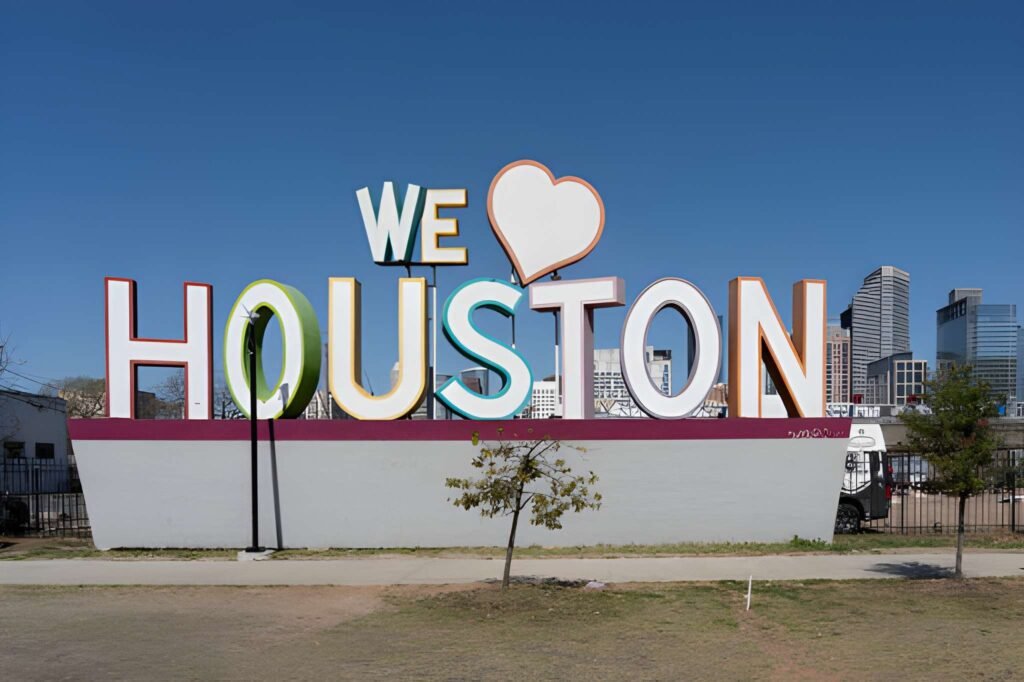
Houston is a city of relentless ambition and sprawling possibility. It defies easy categorization, a flat, vast metropolis where world-class medicine, NASA mission control, and global energy giants coexist with a staggering diversity of cultures and cuisines. Living in Houston means embracing a pragmatic, pro-business ethos where space is plentiful and the cost of living allows for a substantial quality of life. This guide moves beyond the stereotypes of oil and humidity to examine the intricate mechanics of the nation’s fourth-largest city, from its affordable housing market to its unparalleled food scene, providing a clear-eyed view of what it truly means to call H-Town home.
The Houstonian Way: Life in a Sprawling Metropolis
Life in Houston is defined by its scale and diversity. Unlike older, denser cities, Houston expanded outward rather than upward, creating a decentralized landscape of business districts, residential neighborhoods, and shopping centers connected by a vast web of freeways. Your experience is dictated by your chosen “pocket”—life in the Heights is a world away from life in Sugar Land or Clear Lake. The city operates on a work-hard, play-hard mentality, fueled by a booming economy and a famously laissez-faire approach to regulation (exemplified by its lack of zoning). The cultural fabric is incredibly rich; it is one of the most diverse cities in the U.S., with vibrant Vietnamese, Indian, Nigerian, and Mexican communities, among many others. This diversity is most tangibly experienced through its food, arguably the city’s greatest cultural asset. The pace is fast but friendly; the people are ambitious but retain a grounded Texas informality.
The Affordability Advantage: Cost of Living
Houston’s greatest selling point is its affordability relative to other major metros. It offers a big-city job market and amenities with a mid-sized city cost structure, particularly for housing.
A detailed budget for a single professional living in a one-bedroom apartment in a desirable inner-loop neighborhood like Montrose or the Heights might look like this:
- Rent: $1,500 (for a 700-800 sq ft apartment)
- Utilities (Electricity – high due to AC, Gas, Internet): $250 (summer electricity can be very high)
- Groceries: $400
- Dining & Entertainment: $500 (the food scene is a major draw)
- Transportation (Car Payment, Insurance, Gas – a necessity): $700
- Miscellaneous: $300
This creates a baseline monthly expenditure of approximately $3,650. To afford this comfortably (using the standard guideline that rent should not exceed 30% of gross income), your pre-tax annual income would need to be at least $60,000.
This calculation is shown as:
\text{Required Annual Income} = \frac{\$1,500 \times 12}{0.3} = \$60,000This is an attainable salary for many professionals and underscores the city’s accessibility.
Urban Villages and Master-Planned Communities: Best Neighborhoods
Houston’s neighborhoods are distinct and self-contained, often existing as cities within the city.
- Inside the Loop (I-610):
- Montrose: The historic heart of Houston’s counterculture, now a trendy, walkable-ish area known for its art galleries, indie boutiques, and the city’s best restaurants. Diverse and centrally located.
- The Heights: A formerly separate city annexed by Houston. Features beautiful historic bungalows, a family-friendly vibe, and a popular main street (19th St.). Has fought to maintain its character against townhome development.
- Rice Military/Washington Corridor: A area of rapid redevelopment with modern townhomes, popular bars, and easy access to Buffalo Bayou Park. Attracts young professionals.
- Museum District: Adjacent to Rice University and the Texas Medical Center. A quieter, more academic feel with beautiful homes and, as the name implies, proximity to many cultural institutions.
- Outside the Loop:
- The Woodlands: A massive, master-planned community north of the city. Top-rated schools, corporate campuses, and a forested, suburban environment. A long commute but a self-contained world.
- Sugar Land: A major suburb to the southwest with excellent schools, diverse dining, and a high quality of life. Home to a large Asian American community.
- Katy: A far-west suburb known for its strong school districts and family-oriented, sprawling subdivisions. Commuting to downtown is a significant undertaking.
- Clear Lake: Southeast of the city, anchored by the Johnson Space Center and a strong aerospace industry. Offers water-access living and a more relaxed pace.
The Sunbelt Calculation: Renting vs. Buying
The decision to rent or buy in Houston is heavily weighted towards buying for those planning to stay long-term, thanks to affordable prices and strong inventory.
Renting offers flexibility to explore the city’s vast geography and is a low-commitment option in a transient corporate environment. The rental market is soft compared to other cities, offering good value.
Buying is a compelling wealth-building tool. The barrier to entry is lower than in any other major U.S. city. A 20% down payment on a median-priced home is a realistic goal for many dual-income households. However, property taxes are notoriously high in Texas, a significant ongoing cost.
The financial break-even point is typically short, often around 3-5 years. A simplified formula illustrates the calculation:
\text{Break-Even Point (years)} = \frac{\text{Total Upfront Costs}}{\text{Annual Rent} - (\text{Annual Mortgage Interest} + \text{Annual Property Taxes} + \text{Annual Insurance} + \text{Annual Maintenance})}Upfront costs include down payment and closing costs. The high property tax component is a critical factor in this equation.
The Economic Powerhouse: Job Market and Career Opportunities
Houston’s economy is a titan, famously resilient and surprisingly diversified beyond its energy roots.
- Energy: The undisputed core. Houston is the “Energy Capital of the World,” home to hundreds of oil and gas companies, from upstream exploration to downstream chemical manufacturing. The industry’s cyclical nature impacts the entire city.
- Healthcare & BioSciences: The Texas Medical Center is the largest medical complex in the world. It is a city unto itself, employing over 100,000 people and driving innovation in research and patient care. Institutions like MD Anderson Cancer Center are globally renowned.
- Aerospace: The Johnson Space Center (NASA) has anchored the Clear Lake area for decades, supporting a robust ecosystem of engineering and technology firms.
- Manufacturing, Logistics, and Trade: The Port of Houston is one of the busiest in the world, facilitating a massive amount of trade and supporting related industries.
- Professional Services: A large ecosystem of law, engineering, and finance firms supports the core industries.
Educational Landscape: Best Schools and Universities
The Houston Independent School District (HISD) is large and complex, with quality varying dramatically. This has led to high demand for charter schools and a strong culture of school choice via magnet programs. The suburbs are renowned for their highly-rated independent school districts (e.g., Katy ISD, Cypress-Fairbanks ISD).
For higher education, Houston is an elite destination:
- Rice University: A top-ranked private research university, the “Ivy of the South,” located in the Museum District.
- University of Houston (UH): A major public research university and a driving force in the city’s economy and culture.
- Texas A&M University System and University of Texas System both have significant presence and health science centers in the city.
The Commute: Transportation and Traffic Reality
Houston is a car city. Its sheer geographic size and lack of density make a comprehensive public transit system unfeasible. While METRO operates a light rail line (useful for specific routes like the Medical Center or Downtown) and a bus network, the vast majority of residents commute by car. Traffic congestion is severe, particularly on key freeways like I-10, I-45, and the 610 Loop during rush hour. A long commute is the trade-off for affordable housing.
The Housing Market: A Tactical Overview
The Houston housing market is a buyer’s haven compared to coastal cities, characterized by ample supply and relative affordability.
- Average Home Prices: As of late 2023, the median sale price for a home in the Houston-The Woodlands-Sugar Land metro area is approximately $340,000. This provides access to single-family homes, a rarity in other urban cores.
- Most Affordable Areas to Buy a Home: Look to the northern and eastern suburbs: Spring, Humble, Atascocita, and Baytown. These areas offer significant value but come with long commutes.
- Luxury Real Estate Hotspots: River Oaks is the historic epicenter of old money and immense estates. Tanglewood, the Memorial Villages, and Piney Point are also premier addresses. New high-rise condos in Downtown and Upper Kirby cater to a luxury urban market.
- Rental Market: The market is soft, with high inventory keeping prices competitive. It’s possible to find a modern one-bedroom inside the loop for well under $2,000. Landlords typically require proof of income at 3x the monthly rent.
- Best Places to Invest & Future Growth Neighborhoods: Investment looks toward areas on the cusp of gentrification and along transportation corridors. EaDo (East Downtown), the Northside near the Hardy Yards redevelopment, and Sunnyside are seen as having strong potential for appreciation.
The Cultural Repertoire: Things to Do
| Activity Category | Iconic Examples | Hidden Gems |
|---|---|---|
| Cultural Attractions | Museum of Fine Arts Houston, Houston Museum of Natural Science, Menil Collection | The Orange Show, Rothko Chapel, Asia Society Texas Center |
| Parks & Outdoors | Memorial Park, Hermann Park, Buffalo Bayou Park | Levy Park, Discovery Green, Armand Bayou Nature Center |
| Food & Drink | Texas BBQ (Truth, Pit Room), Viet-Cajun Crawfish, Tex-Mex | Nancy’s Hustle (New American), Himalaya (Indian/Pakistani), countless stellar strip mall eateries |
| Nightlife | Bars in Washington Corridor, Midtown, and Main St. Downtown | Anvil Bar & Refuge, Poison Girl, live music at White Oak Music Hall |
Annual Festivals and Events: The Houston Livestock Show and Rodeo (February/March) is the city’s biggest event, shutting down much of the city for three weeks. Other major events include the Art Car Parade and countless cultural festivals reflecting the city’s diversity.
Shopping: From the ultra-luxury of the Galleria mall to the eclectic boutiques of Montrose and the discount hunters’ paradise of Katy Mills.
Quality of Life & Relocation Essentials
- Raising a Family: Excellent in the suburbs with top-tier schools and large homes. More challenging inside the loop due to school options, but neighborhoods like the Heights and West University Place are family magnets.
- Crime and Safety: Like any large city, crime is not evenly distributed. Property crime is common. Violent crime is concentrated in specific, economically disadvantaged areas. Researching specific neighborhoods is crucial.
- Healthcare and Hospitals: Unrivaled. The Texas Medical Center is the largest in the world, containing top-ranked hospitals like MD Anderson, Methodist, and Texas Children’s Hospital.
- Weather and Climate: The climate is a major factor. Summers are long, oppressively hot, and humid from May to October. The city is prone to severe weather, including flooding, which is a critical consideration for home buying (always check flood maps). Winters are mild and short.
- Cost of Utilities: For a 2,000 sq ft house, average monthly costs are:
- Electricity (CenterPoint): $200 – $300+ (extremely high in summer due to AC)
- Water/Sewer: $80 – $120
- Internet: $80 – $100
- Gas (if used for heating): $50 – $100 in winter
The Relocation Checklist
- Secure Employment: The economy is strong, but have a job lined up.
- Choose Your Neighborhood Based on Commute: Your daily drive will majorly impact your quality of life. Use Google Maps to test commute times during rush hour from potential homes.
- Check Flood Maps: Before renting or buying, consult FEMA and Harris County Flood Control District maps. Avoid properties in floodplains or with a history of flooding.
- Get a Car: You will need a reliable one. Factor in insurance, tolls, and gas.
- Prepare for the Heat: Invest in a good AC system for your home and car. Learn to embrace indoor and water-based activities during the summer.
The Final Verdict: Pros and Cons of Living in Houston
Pros:
- A strong, diverse economy with abundant job opportunities, particularly in energy and healthcare.
- A very affordable cost of living, especially for housing, allowing for a high standard of living.
- No state income tax, a significant financial benefit.
- Unparalleled cultural and culinary diversity.
- A pragmatic, friendly, and unpretentious culture.
Cons:
- Brutally hot and humid summers that last for half the year.
- Severe traffic congestion and a total reliance on cars due to extreme sprawl.
- High property taxes and homeowners insurance rates.
- A significant and real risk of flooding and severe weather.
- Urban sprawl can lead to a lack of community feel and a generic landscape.
Living in Houston is a choice to prioritize economic opportunity, space, and affordability over climate and density. It is a city that works, offering a practical path to homeownership and career advancement without the intense financial pressure of coastal hubs. For those who can withstand the heat and navigate the freeways, it provides a dynamic, diverse, and deeply rewarding place to build a life.